The Matter of the Governor-General
An interview with the Governor-General Sam Mostyn
The Daily Aus
July 7, 2025
We are concerned about her comment: “We have a historical connection to the monarch, but that has no bearing on the way in which I conduct myself in the role.” Whilst, upon appointment, Governors-General act in accordance with the Australian Constitution and not as a delegate in office of the monarch, no Governor-General before her has ever disconnected themselves from the Sovereign with such words.
More troubling is the Governor-General’s statement "I cannot read the bill and say, actually I have some questions or I'd like to debate aspects of this, and anything I might think about the matter. Any understanding about that matter is completely irrelevant at that moment. It's my job to fulfil the ultimate final step of the people's elected representatives, passing laws that then need the assent under the constitution.”
Put bluntly A Governor-General is not a ceremonial rubber stamp. Sir Paul Hasluck who was Governor-General 1969-1974 had written in ‘The Office of Governor-General’ 1979 that whilst the Governor-General is expected to act on ministerial advice, they are not compelled to accept it blindly. Instead, they are entrusted with the responsibility to:
# Evaluate and discuss the advice with ministers.
# Ensure constitutional integrity, without encroaching on the executive’s political functions.
# Avoid partisan advocacy, maintaining neutrality and preserving the dignity of the office.
# Safeguard governmental stability and uphold the broader interests of the nation.
The Governor-General may question conclusions, seek justifications, and ensure that all relevant considerations are addressed. However, they must refrain from political argument or partisanship, acting as a constitutional guardian rather than a political actor.
Sir Paul's comments, together with those of Sir David Smith are below.
Extract from “The Office Of Governors-General” (1979)
by Sir Paul Hasluck KG GCMG GCVO
Governor-General of Australia 1969 to 1974.
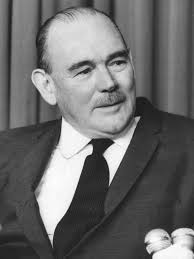
Another example concerns the assent to Bills. After a bill has been passed by both Chambers of Parliament it is presented for the Governor-General’s assent and the legislative process is not complete until the Governor-General has signed two copies of the bill and returned them to both Chambers with a message informing them of his assent. When the bills are presented to him, they are accompanied by a certificate from the appropriate officer of the Parliament that the text presented is the text passed by each House. Normally, on the certificates, the Governor-General gives his assent without delay
What would happen if, on reading the bill, he found some fault in it? That was in fact a recent case of this kind in one of the States. The Governor of the State detected an error in the text and drew the attention of the officers of the House to the fact that the Bill, as drawn, contained a sentence that did not make sense, although it was undoubtedly what the two chambers had passed. On further examination, his opinion was confirmed. The solution was for the Governor to return the Bills to an amendment to rectify the error - an interesting illustration that the Queen is part of Parliament and of the whole legislative process.
Although it may be highly unlikely to arise in practice, it is theoretically possible that if the Governor-General were presented with a bill agrees to by a majority in both Houses, that was clearly contrary to some provision of the constitution, he could return it to Parliament pointing out the conflict. To give a wholly imaginary and very extreme illustration, let us suppose that at a general election one party received a huge majority in both houses and immediately, (in spite of all objections that might have been raised by their draughtsman or their political opponents and in contempt of a possible appeal to the High Court) put through Parliament a Bill saying that no more elections should be held until the Minister for the Interior decided to hold them. I Governor-General could properly withhold assent to such a Bill on the ground that this was an action that could only be done by Parliament in accordance with the provisions of the Constitution for the amendment of the Constitution. Undoubtedly a crisis would be precipitated.
Such an extreme illustration underlines an important point. In normal times when customary practices and procedures are being followed and the Constitution and laws of the Commonwealth are being scrupulously observed, the role of the Governor-General in Parliament would seem to be a matter of unbroken routine: In abnormal times or in case of any attempt To Disregard the Constitution or the laws of the Commonwealth, or even the customary usages of Australian government, it would be the Governor-General who could present the crisis to Parliament and, if necessary, to the nation for determination. It is not that the Governor-General (or the Crown) can over-ruled the elected representatives of the people but in the ultimate he can check the elected representatives in any extreme attempt by them to disregard the rule of law or the customary usages of Australian government and he could do by forcing a crisis.
See pdf of full contents below.
Extract from 'The Role of the Governor-General'
Sir David Smith, KCVO, AO
Official Secretary to the Governor-General 1973-1990
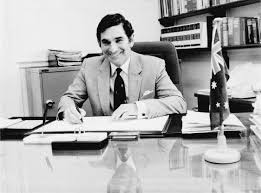
The Constitution requires the Governor-General to appoint a Federal Executive Council to advise him in the government of the Commonwealth; to establish departments of State and to appoint Ministers of State to administer them; to summon, prorogue and dissolve Parliament; to give the Royal assent to a Bill which has been passed by both Houses of the Parliament; and to exercise the command-in-chief of the Defence Force of the Commonwealth. All of these actions are taken on ministerial advice. The Constitution also sets out many other powers, as part of the machinery of government, that are to be exercised either by the Governor-General, acting on the advice of a Minister, or by the Governor-General in Council, i.e., the Governor-General acting with the advice of the Federal Executive Council. It is the Governor-General who issues the writs for general elections of members of the House of Representatives; 31 informs the Parliament of the purpose of every appropriation of revenue or moneys (for without such a message from the Governor-General a proposed appropriation may not be passed by the Parliament); appoints the Justices of the High Court of Australia and of the other courts created by the Parliament, such as the Federal Court and the Family Court; appoints deputies to carry out such powers and functions as he may assign to them; and submits to the electors such proposals for the alteration of the Constitution as have been passed by the Houses of the Parliament in accordance with the provisions of the Constitution. But by far the majority of the Governor-General's powers and duties are imposed upon him by statute. Virtually every Act passed by the Australian Parliament empowers the Governor-General to perform some executive function, such as to make and amend regulations, or to issue orders which amplify the legislative provisions; to issue proclamations; to make and terminate appointments to public office; to approve treaties with foreign governments; to appoint Ambassadors and High Commissioners; or to issue commissions to officers of the Defence Force. These are the kinds of executive actions which the Parliament has judged ought not to be left solely to the Minister of State who is responsible for the administration of the particular Act of Parliament, and which therefore require the Minister to seek the approval of the Governor-General in Council. In discharging his constitutional and statutory functions, the Governor-General acts on the advice of his Ministers.
As former Governor-General Sir Paul Hasluck put it, in a lecture given when he was still in office: "[The Governor-General] has the responsibility to weigh and evaluate the advice and has the opportunity of discussion with his advisers. It would be precipitate and probably out of keeping with the nature of his office for him to reject advice outright but he is under no compulsion to accept it unquestioningly. He has a responsibility for seeing that the system works as required by the law and conventions of the Constitution but he does not try to do the work of Ministers. For him to take part in political argument would both be overstepping the boundaries of his office and lessening his own influence. He can himself question a conclusion, seek to know the reason for it, draw attention to relevant considerations to ensure they are taken into account, and satisfy himself that the proposal does express the single mind of his advisers, but he himself, while influencing the outcome of discussion in this way, needs to be careful not to be an advocate of any partisan cause. In doing this he has two dominant interests - the stability of government (no matter from which political party it is drawn) and regard for the total and non-partisan overall interests of the people and the nation." It would be very easy to conclude that a Governor-General who is required to act on the advice of his Ministers has no power at all, or that Ministers whose advice has to be taken have no restraints placed on their use of executive power, but to do that would be to misunderstand the basic principle which underlies our system of constitutional government. For their part, Ministers are not able to carry into effect, on their own, all of the executive powers conferred on them by the legislation which they administer without first obtaining the approval of their fellow Executive Councillors and the Governor-General. So the real question is not at all how much power does the Governor-General himself have or exercise, but rather how much absolute power does his presence in our system of government deny to those who are in Government, and who must first seek to advise and persuade him.
In the words of another former Governor-General, Sir Zelman Cowen: "By a due attendance to the business of his office, by the exercise of functions and influence within the limits described by Bagehot [to be consulted, to encourage, and to warn], a Governor-General can, in appropriate cases, exercise an effective influence on the processes of government." 33 The powers and functions which are assigned to the Governor-General by the Constitution and by Acts of Parliament are the legal basis for his statutory duties, and they are the reason for having such a person in our system of government.
THE COMMISSION
Passed under the Royal Sign Manual and the
Great Seal of Australia appointing
SAMANTHA JOY MOSTYN AC
to be the Governor-General of the Commonwealth of Australia
“The Office Of Governors-General” (1979)
by Sir Paul Hasluck KG GCMG GCVO
Governor-General of Australia 1969 to 1974.
PDF format
Do you like this page?
-
 Russell Wilk commented 2025-07-12 12:23:59 +1000Very well put. It’s deeply disturbing that the Governess-General relentlessly issues comments which are not only inappropriate for any citizen of Australia, but reveal contempt for the Constitutional Monarchy, & in particular His Majesty the King, whom she ostensibly represents. Such a deep conflict of interest renders her ongoing tenure of her position unacceptable.
 -
 Philip Benwell published this page 2025-07-11 12:07:03 +1000